
Working Holiday Australia: Complete Guide for 2026
Planning a working holiday in Australia in 2026?
This complete guide shows you exactly how to apply, find jobs, manage your budget, and avoid common mistakes — even if you’re starting from zero.
By the end of this guide, you’ll know:
✔️ How to get your visa
✔️ How much money you need
✔️ Where to live and work
✔️ How to extend your stay
Let’s get started.
Last updated: June 2026 — This guide has been reviewed and updated to reflect current Working Holiday Visa requirements, eligibility rules, regional work requirements, job opportunities, and living costs in Australia for 2026.
🎁 Plan your Australia working holiday the right way
Skip the confusion and get a step-by-step plan before you go.
✅ Visa checklist
✅ How to find a job fast
✅ 88 days explained simply
Free • No spam • Unsubscribe anytime

What Most People Expect vs Reality
Many people imagine a Working Holiday in Australia as a year of beaches, road trips, and easy job opportunities.
And while those experiences absolutely exist, the reality is often more complex.
Most travelers spend their first weeks setting up bank accounts, searching for accommodation, adjusting to Australian prices, and applying for jobs.
Some find work within days.
Others spend several weeks job hunting before receiving their first offer.
The people who have the best Working Holiday experiences are rarely the luckiest.
They are usually the ones who arrive with realistic expectations, enough savings, and a flexible mindset.
Understanding both the opportunities and challenges before arriving can make a huge difference to your overall experience.
What Is a Working Holiday Visa in Australia?
A Working Holiday Visa (WHV) allows young people to live, work, and travel in Australia for up to 12 months, with the option to extend. It is designed for travelers who want more than just a short holiday, offering real work experience, income, and long-term travel opportunities.
It is one of the most popular work abroad programs in the world, especially among people planning a gap year or extended stay in Australia.
With this visa, you can:
- Work legally while traveling
- Stay for up to 12 months on your first visa
- Apply under Subclass 417 or Subclass 462 (depending on nationality)
- Change employers and work in different industries
- Qualify for a second or third year through regional work
- Enter and leave Australia freely during your stay
Most working holiday makers find jobs in hospitality, farming, tourism, construction, or retail, making it easier to support themselves while exploring the country.
Before applying, always check which visa subclass your passport qualifies for. Applying under the wrong category can delay your plans and create unnecessary stress.
Understanding how the Working Holiday Visa works is the foundation of your entire Australia adventure. Once you know your options, you can plan your budget, job search, and travel route with confidence.
👉 Read the full guide: How the Australian Working Holiday Visa Works in Detail
Who Can Apply for a Working Holiday Visa? (Age & Countries)
Not everyone can apply for a Working Holiday Visa in Australia. To be eligible, you must meet specific age, passport, and personal requirements set by the Australian government.
These rules are designed to ensure the program remains focused on young travelers who want to combine work and travel, rather than long-term migration.
To apply for a Working Holiday Visa, you generally must:
- Be between 18 and 30 years old (up to 35 for some countries)
- Hold a passport from an eligible country
- Apply from outside Australia
- Have sufficient savings (usually around AUD 5,000)
- Meet basic health and character requirements
- Not be accompanied by dependent children
Australia offers two main visa types: Subclass 417 and Subclass 462. Which one you qualify for depends on your nationality, and each has slightly different conditions and partner countries.
Some nationalities may also need additional documents, such as proof of English proficiency, education certificates, or government support letters. These requirements can change over time, so it is important to check official sources before applying.
Before starting your application, take time to confirm that your passport country is eligible and that you meet all age and financial requirements. Missing even one condition can result in a rejected application.
Knowing whether you qualify saves you time, money, and frustration — and helps you plan your Working Holiday experience realistically from the start.
👉 Read the full guide: Complete Eligibility Rules for Working Holiday Australia
How to Apply for a Working Holiday Visa (Step-by-Step)
Applying for an Australia Working Holiday Visa (WHV) is done entirely online and is usually a straightforward process — as long as you prepare properly. Most applicants complete their application in one session and receive a decision within days or weeks.
This step-by-step process applies to both Subclass 417 and Subclass 462 visas and reflects the latest requirements for 2026.
To apply for a Working Holiday Visa in Australia, you need to:
- Create an official ImmiAccount on the Australian immigration website
- Choose the correct visa type (417 or 462) based on your nationality
- Complete the online application form with accurate personal details
- Upload required documents, such as your passport and financial proof
- Answer health and character questions honestly
- Pay the visa application fee securely online
- Submit your application and track its status digitally
Before starting, make sure you have a valid passport, a recent bank statement, and a stable internet connection. Small mistakes — such as incorrect passport numbers or missing documents — are among the most common reasons for processing delays.
Always double-check your information before submitting. Once your application is sent, changes are difficult and may require contacting immigration support.
Understanding the full application process in detail can significantly increase your chances of fast approval and reduce unnecessary stress. Knowing exactly what to prepare, where to click, and what to avoid makes a real difference.
👉 Read the full guide: Step-by-Step Application Guide for Working Holiday Australia (2026)
💡 Want step-by-step guides and tools?
Visit worktravelguide.com
How Much Money Do You Need for Australia WHV in 2026?
To apply for an Australia Working Holiday Visa (WHV), you must show that you have enough money to support yourself when you arrive. This financial requirement ensures that Working Holiday travellers can cover their initial living costs before finding a job.
For most applicants, the Australian government recommends having at least AUD 5,000 in accessible funds, plus enough money for a return ticket or onward travel.
When planning your Working Holiday budget, you should prepare for:
- Initial living costs (hostels, food, and transport during your first weeks)
- Visa application fee and related expenses
- Health and travel insurance coverage
- A potential job search period without income
- Emergency savings for unexpected situations
- Flight and relocation costs
In practice, many experienced Working Holiday travellers recommend arriving with AUD 6,000–8,000 for a more comfortable start — especially if you plan to stay in major cities like Sydney or Melbourne, where rent and daily expenses are higher.
Before applying, make sure your bank statement clearly shows accessible funds in your own name. Immigration officers may request financial evidence at any stage of the application process.
Being financially prepared is one of the most important factors for a successful Working Holiday in Australia. Strong savings give you flexibility, reduce stress, and help you focus on finding quality job opportunities rather than accepting the first offer available.
One of the biggest mistakes new Working Holiday travelers make is arriving with only the minimum amount required by immigration.
While AUD 5,000 may satisfy visa requirements, many travelers quickly discover that accommodation deposits, transport costs, food, and job-hunting expenses add up faster than expected.
Having additional savings provides flexibility and allows you to focus on finding quality opportunities instead of accepting the first job available.
👉 Read the full guide: Complete Budget Plan for Australia Working Holiday
Essential Setup Before Arriving In Australia
✅ Recommended Resources for WHV Travelers
Regional Australia often involves:
- remote towns
- difficult transport
- physically demanding work
- unpredictable weather
- limited medical access
✈️ Travel Insurance for Regional Australia
Medical treatment in remote parts of Australia can become surprisingly expensive, especially for backpackers doing regional or farm work.
Many travelers don’t think much about insurance until something unexpected happens — like an injury, infection, or accident far from major cities.
Because of this, many Working Holiday travelers choose flexible travel insurance designed for backpackers and long-term travelers, such as SafetyWing.
👉 Explore SafetyWing Travel Insurance for WHV Travelers
📱 Internet Access After Arriving in Australia
Many farm employers prefer contacting backpackers through Australian phone numbers instead of international SIM cards, especially during active job applications.
At the same time, many travelers still need internet immediately after arriving in Australia for things like airport transport, maps, accommodation check-ins, and early job searching.
Many WHV travelers choose to set up a travel eSIM before arriving in Australia so they have internet access immediately after landing.
Flexible travel eSIM providers like Airalo are popular among backpackers during the first days in Australia before setting up a long-term Australian phone plan.
👉 Explore Australia eSIM Plans with Airalo
🏠 Finding Backpacker Accommodation in Australia
Finding accommodation during a Working Holiday in Australia can become surprisingly stressful, especially in busy backpacker regions during peak travel seasons.
Many travelers arrive expecting to find cheap hostel beds immediately, only to discover that popular areas can fill up quickly during farm harvest seasons or summer months.
For short-term stays, job-hunting periods, or the first days after arriving in Australia, many WHV travelers use backpacker accommodation platforms like Hostelworld to compare hostels, reviews, and locations more easily.
👉 Explore Backpacker Accommodation in Australia
For complete setup help, read our bank, SIM card & insurance setup guide for Australia.
Best & Highest-Paying Jobs for WHV in Australia
Finding the right job is one of the most important parts of a successful Australia Working Holiday Visa experience. The job you choose affects not only your income, but also your lifestyle, travel route, and chances of extending your stay.
Most Working Holiday makers work in flexible, short-term roles that allow them to move between cities and regions. These jobs are designed for travellers and are available year-round across Australia.
Some of the most common and reliable jobs for Working Holiday makers include:
- Hospitality – cafés, restaurants, bars, and hotels
- Farm and harvest work – fruit picking, packing, and crop work
- Construction and labouring – site work, renovations, and trade support
- Tourism and resorts – tour companies, hostels, and holiday parks
- Retail and customer service – shops, supermarkets, and malls
- Office and temp work – administration and call centres (for longer stays)
Hospitality and farm work are especially popular because they are easy to enter and often provide steady hours. Construction jobs usually pay higher wages but may require physical fitness or basic experience.
Where you start also matters. Cities like Sydney, Melbourne, Brisbane, and Perth offer more hospitality and retail jobs, while regional areas provide better access to farm work and second-year visa opportunities.
Before accepting any job, always confirm that the employer is registered and pays legal wages. Underpayment remains an issue in some industries, and protecting your rights is essential.
Choosing the right job can help you earn more, travel further, and qualify for visa extensions. A smart job strategy gives you long-term flexibility during your Working Holiday in Australia.
One thing many first-time Working Holiday travelers are surprised by is how different jobs can feel in practice.
A high-paying construction job may help you save money quickly, while hospitality work often provides greater flexibility and social opportunities.
The best job is not always the one with the highest hourly wage. It is often the one that best matches your goals, personality, and travel plans.
👉 Read the full guide: Best-Paying and Easiest Jobs for Working Holiday Makers in Australia
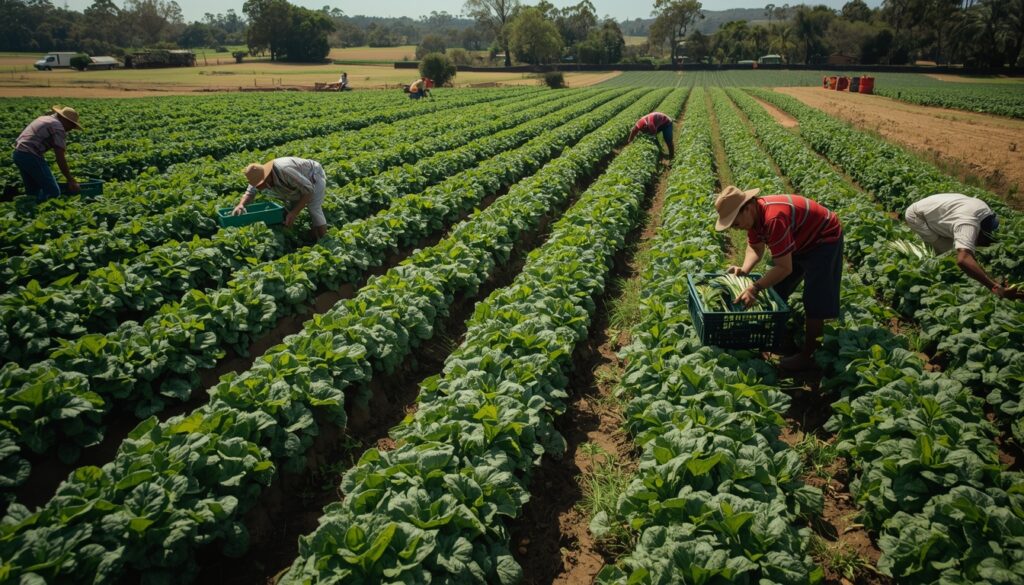
Farm Work & 88 Days Explained
Completing “88 days” of specified work is the main requirement for qualifying for a second-year Australia Working Holiday Visa. This system allows eligible travellers to extend their stay and continue working and travelling in Australia.
The “88 days” usually refers to three months of full-time work in approved industries and regional areas. Most Working Holiday makers complete this requirement through farm work, although other types of regional employment may also qualify.
To count toward your second-year Working Holiday Visa, your work must be:
- Completed in approved regional areas
- Performed in eligible industries such as agriculture, mining, or construction
- Paid legally and properly recorded by your employer
- Supported by official payslips and tax records
- Entered correctly in your visa application
Common 88-day jobs include fruit picking, packing sheds, cattle stations, vineyard work, and harvest labour. In some locations, regional hospitality and tourism roles may also qualify.
Not all farm jobs are legitimate, and misinformation is common. Some employers advertise “88 days jobs” that do not meet immigration requirements. Accepting the wrong position can result in your days being rejected later.
Before starting any regional work, always confirm that the employer, location, and job type are officially approved. Keep copies of contracts, payslips, and work records throughout your employment.
Completing your 88 days strategically can open the door to a second or even third year in Australia. With proper planning, regional work becomes an opportunity rather than just an obligation.
Many backpackers delay their 88 days because they believe they have plenty of time.
However, waiting until the final months of your visa can create unnecessary pressure if jobs become difficult to find or regional seasons change.
Planning your regional work early often gives you more flexibility and reduces stress later.
👉 Read the full guide: How to Complete Your 88 Days for a Second-Year Visa
Don’t make the same mistakes most travelers do
Most people waste time, money, or struggle to find jobs because they don’t know what to expect.
✅ How to find jobs faster
✅ What to prepare before arriving
✅ How to complete your 88 days
Free • No spam • Unsubscribe anytime
Monthly Cost of Living in Australia
Understanding the cost of living is essential for anyone planning an Australia Working Holiday Visa. While wages are generally high, daily expenses can also be significant — especially in major cities.
Your monthly budget will depend on where you live, how you travel, and how quickly you find work. Major cities offer more job opportunities, but usually come with higher rent and living costs.
On average, Working Holiday makers in Australia should expect to spend money on:
- Accommodation (hostels, shared housing, and short-term rentals)
- Food and groceries
- Public transport or fuel
- Mobile phone and internet plans
- Health insurance and medical costs
- Entertainment and social activities
In cities like Sydney and Melbourne, rent and transport are usually the largest expenses. In regional towns, housing is often cheaper, but food and transport may cost more due to limited options.
Many Working Holiday travellers reduce their living costs by sharing accommodation, cooking at home, using public transport, and choosing long-term rentals instead of short stays.
Before arriving, prepare a realistic budget that covers at least your first one to two months. This gives you time to settle in, find work, and avoid unnecessary financial pressure.
Managing your expenses effectively allows you to save money while still enjoying your Working Holiday experience. A balanced budget gives you more freedom to travel, change jobs, and take advantage of new opportunities.
👉 Read the full guide: Monthly Budget and Living Costs in Australia for WHV
Where to Live: Best Cities & Regions
Choosing where to live is one of the most important decisions during your Australia Working Holiday Visa experience. Your location affects job opportunities, living costs, lifestyle, and your ability to complete regional work for a second-year visa.
Some Working Holiday makers prefer major cities for career opportunities and social life, while others choose regional areas for lower rent and easier access to farm work. There is no single “best” place — the right choice depends on your priorities.
Popular locations for Working Holiday makers in Australia include:
- Sydney – strong job market, high wages, higher living costs
- Melbourne – café culture, creative industries, strong hospitality sector
- Brisbane – warm climate, growing job market, generally lower rent
- Perth – mining and construction opportunities, quieter lifestyle
- Gold Coast – tourism, hospitality, beach-focused lifestyle
- Regional towns – farm work, lower rent, second-year visa eligibility
Major cities offer more job variety and networking opportunities, but competition for housing and employment can be higher. Regional areas often provide faster access to qualifying work and a more affordable daily lifestyle.
Before choosing a location, research current job demand, rental prices, and public transport options. Many travellers move strategically between cities and regional areas to maximise income and visa extension opportunities.
Where you live will shape your entire Working Holiday experience. The right base can make job hunting easier, reduce financial stress, and significantly improve your overall quality of life in Australia.
There is no perfect city for every Working Holiday traveler.
Some people thrive in Sydney’s fast-paced environment and large job market, while others prefer smaller cities or regional towns where living costs are lower and life moves at a slower pace.
The best choice depends on your budget, personality, career goals, and travel plans.
👉 Read the full guide: Best Places to Live on a Working Holiday Visa in Australia
Bank, SIM Card & Insurance Setup
Setting up your bank account, mobile SIM card, and insurance should be one of your first priorities after arriving in Australia on an Australia Working Holiday Visa. These essentials allow you to get paid, stay connected, and protect yourself financially.
Without a local bank account and phone number, finding work and receiving wages can be difficult. Travel and health insurance are equally important, as medical treatment in Australia can be expensive without proper coverage.
Most Working Holiday makers should arrange the following as soon as possible:
- Open an Australian bank account to receive salary payments
- Get a local SIM card for job applications and daily communication
- Register for online banking and mobile payments
- Purchase comprehensive travel and health insurance
- Keep digital and physical copies of important documents
Many Australian banks allow you to open an account online before arrival, which can save time during your first week. SIM cards are widely available at airports, shopping centres, and convenience stores.
When choosing insurance, look for policies that cover medical treatment, workplace injuries, travel delays, and personal belongings. Some policies also include personal liability protection, which can be useful for casual and manual work.
Before accepting your first job, make sure your bank details are correct and your insurance is active. Delays in setup can lead to late payments and unnecessary financial stress.
Having your finances, communication, and insurance in place gives you security and independence from day one. A smooth setup helps you focus on working, travelling, and enjoying your time in Australia.
👉 Read the full guide: How to Set Up Banking, SIM Cards, and Insurance in Australia
How to Save Money While in Australia
Living in Australia on an Australia Working Holiday Visa can be expensive, especially in major cities. However, with the right habits and financial planning, it is possible to save money while still enjoying your travel experience.
Many Working Holiday makers struggle financially not because they earn too little, but because they underestimate daily expenses and overspend during their first months.
To reduce your living costs and build long-term savings, focus on these key areas:
- Choose shared accommodation instead of private rentals
- Cook at home and limit eating out
- Use public transport, travel cards, or bicycles
- Compare mobile, internet, and insurance plans regularly
- Track your spending with budgeting apps
- Look for jobs that offer stable hours and overtime pay
- Take advantage of free events, beaches, and public parks
Small lifestyle changes can make a significant difference over time. Saving just AUD 20–30 per day can add up to several thousand dollars over a year.
Before arriving, set a realistic monthly savings goal and treat it like a fixed expense. Transfer money to savings as soon as you get paid to avoid impulsive spending.
Strong money management gives you more freedom to travel, change jobs, and extend your stay. When your finances are under control, your Working Holiday experience becomes far less stressful and far more rewarding.
👉 Read the full guide: Proven Money-Saving Tips for Working Holiday Makers in Australia
Common Mistakes to Avoid
Many people start their Australia Working Holiday Visa adventure with high expectations — but end up losing time, money, or opportunities because of avoidable mistakes. Most problems occur during the first few months, when new arrivals are still learning how the system works.
Understanding these common errors early can help you settle faster, earn more, and enjoy your time in Australia with far less stress.
Some of the most frequent mistakes Working Holiday makers make include:
- Applying for the wrong visa subclass
- Arriving without sufficient savings
- Not setting up a bank account and Tax File Number (TFN) quickly
- Accepting underpaid or illegal jobs
- Failing to confirm whether farm work qualifies for 88 days
- Overspending during the first few weeks
- Not keeping payslips and official work records
- Skipping proper travel or health insurance coverage
Many travellers also underestimate how competitive job and housing markets can be in major cities like Sydney and Melbourne. Delaying job applications or accommodation searches often leads to unnecessary stress and higher expenses.
Before accepting any job or rental agreement, always verify employer details, legal wage rates, and contract terms. Taking a few extra minutes to check information can prevent months of frustration later.
Avoiding these mistakes gives you a major advantage over unprepared travellers. When you start your Working Holiday with the right mindset and systems in place, your experience becomes smoother, safer, and more financially rewarding.
Most Working Holiday mistakes are not caused by bad luck.
They happen because travelers make important decisions without understanding how the system works.
A few hours of research before arriving can save weeks of stress later.
👉 Read the full guide: Top Mistakes to Avoid on an Australia Working Holiday Visa
FAQ About Working Holiday in Australia
Before applying for an Australia Working Holiday Visa, most travellers have similar questions about rules, work limits, visa extensions, and daily life. Getting clear answers early helps you avoid confusion and plan your stay more effectively.
This section covers the most common questions asked by first-time Working Holiday makers.
Can I work for more than one employer?
Yes. You are allowed to change jobs and work for multiple employers during your visa. However, there may be time limits per employer depending on your visa subclass and job type.
How long does visa processing take?
Processing times vary. Some applicants receive approval within days, while others may wait several weeks, depending on background checks and documentation.
Can I extend my Working Holiday Visa?
Yes. By completing approved regional work, you may qualify for a second and third year, depending on your eligibility and nationality.
Do I need a job before arriving?
No. Most Working Holiday makers find work after arriving in Australia. Having sufficient savings is more important than having a job offer in advance.
Is health insurance mandatory?
While not always legally required, comprehensive travel and health insurance is strongly recommended. Medical treatment without coverage can be very expensive.
Can I study while on a WHV?
Yes. You are allowed to study for up to four months during your stay.
Is Australia still worth it for Working Holiday travelers in 2026?
For many travelers, absolutely.
Australia continues to offer strong wages, diverse job opportunities, and the chance to combine work with long-term travel. While living costs have increased in recent years, many Working Holiday makers still find it possible to save money while exploring the country.
The key is arriving with realistic expectations, sufficient savings, and a flexible mindset.
How difficult is it to find work in Australia?
This depends on factors such as location, season, previous experience, and the type of work you are looking for.
Some travelers secure a job within a few days, while others spend several weeks applying before receiving their first offer.
Being flexible about where you work and remaining open to different industries often increases your chances of finding employment quickly.
Can I save money on a Working Holiday Visa?
Yes. Many Working Holiday travelers save thousands of dollars during their stay.
Jobs in construction, remote hospitality, warehousing, and regional industries often provide strong earning potential, especially when combined with careful budgeting and shared accommodation.
Your ability to save depends largely on your lifestyle, location, and spending habits.
What is the biggest mistake first-time travelers make?
One of the most common mistakes is arriving with unrealistic expectations.
Many people underestimate how much money they will spend during their first month or assume they will find work immediately after landing.
Having a financial buffer and preparing before arrival can significantly reduce stress during your first weeks in Australia.
Should I start in a city or regional area?
There is no single correct answer.
Major cities often provide more job opportunities, better public transport, and larger backpacker communities. Regional areas may offer lower living costs, easier access to qualifying visa work, and less competition for jobs.
The best choice depends on your goals, budget, and the type of experience you want to have.
Rules and conditions can change, and individual situations may differ. Always verify important details through official government sources before making major decisions.
Having accurate answers helps you feel confident and prepared before starting your Working Holiday journey.
👉 Read the full guide: Complete Working Holiday Australia FAQ (2026 Update)
Continue Your Working Holiday Planning
Now that you understand how the Working Holiday program works, the next step is deciding how you want to structure your experience in Australia.
Explore these guides:
👉 How to Apply for a Working Holiday Visa Australia
👉 Best Jobs for Working Holiday Australia
👉 Highest Paying Jobs for Working Holiday Australia
👉 Cost of Living in Australia for Working Holiday Travelers
👉 Best Cities for Working Holiday Australia
👉 Bank, SIM Card & Insurance Setup in Australia
👉 Working Holiday Australia Mistakes to Avoid
Final Thoughts: Your Australian Adventure Starts With a Single Decision
For many people, a Working Holiday Visa Australia begins as a simple idea.
Maybe it’s a desire to travel more, earn money abroad, take a gap year, escape routine, or experience something completely different before life becomes more complicated.
But for many travelers, it turns into much more than that.
A Working Holiday is not just about finding a job, completing 88 days, or extending a visa.
It’s about stepping into the unknown and discovering what you’re capable of when everything around you is unfamiliar.
You might arrive knowing nobody.
You might spend your first days navigating a new city, searching for work, and wondering if you made the right decision.
Then, almost without noticing, things begin to change.
You build confidence.
You meet people from around the world.
You learn new skills.
You gain independence.
And somewhere between the early uncertainty and the flight home, Australia starts to feel less like a destination and more like a chapter of your life that you’ll remember forever.
Some travelers stay for one year.
Others stay for two or three.
Many leave with lifelong friendships, unforgettable memories, and a completely different perspective on what they’re capable of achieving.
The visa is simply the tool.
What you do with the opportunity is what matters.
If you’re serious about planning your Working Holiday properly, continue exploring our guides on visas, jobs, budgeting, cities, and regional work.
Your Australian adventure doesn’t start when you land.
It starts the moment you decide to go.
Ready to start your working holiday in Australia?
You now know what it takes — but having everything in one place makes it much easier.
✅ Step-by-step plan
✅ Job strategies
✅ 88 days simplified
Free • No spam • Unsubscribe anytime