
If you’re planning to complete your 88 days Australia working holiday requirement, it’s essential to understand the rules before you start working.
For many Working Holiday makers, these 88 days of specified regional work are the gateway to extending their visa — but they are also one of the most confusing and misinterpreted parts of the entire program.
Many travelers believe it only means fruit picking. Others accept jobs that later turn out to be invalid. Some lose months of work because they did not keep proper records.
In this complete 2026 guide, you’ll learn:
- What the 88 days requirement actually means
- Which jobs qualify (it’s not just farm work)
- Which locations are approved
- How to calculate your days correctly
- Common scams and mistakes
- How to protect yourself legally
If you’re planning a second or third Working Holiday Visa, this article could save you months of frustration.
👉For a full overview of visa rules, read our complete Working Holiday Australia guide.
Last updated: June 2026
🎁 Plan your Australia working holiday the right way
Skip the confusion and get a step-by-step plan before you go.
✅ Visa checklist
✅ How to find a job fast
✅ 88 days explained simply
Free • No spam • Unsubscribe anytime
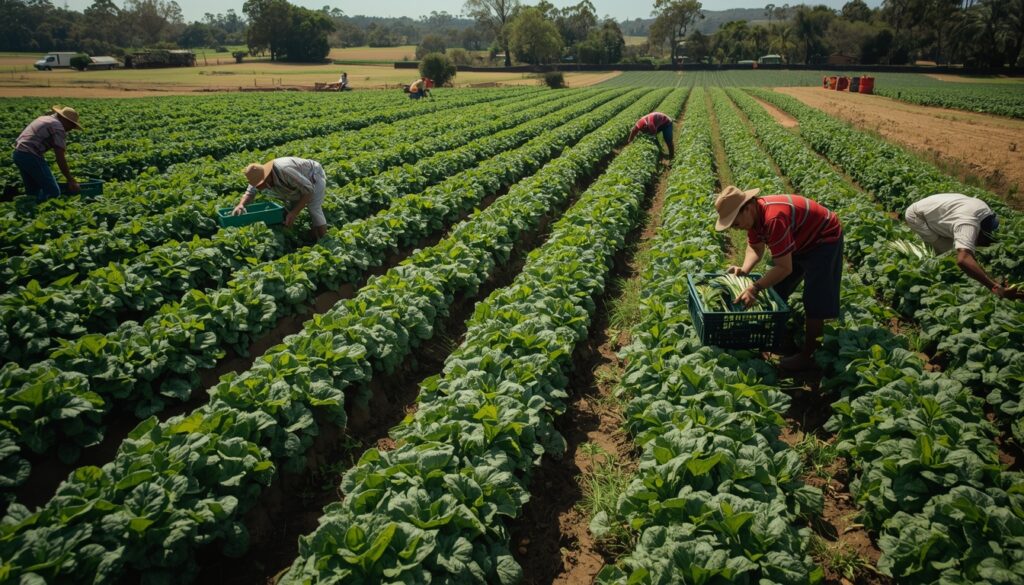
What Most Backpackers Get Wrong About 88 Days
Many first-time Working Holiday travelers assume that any farm job automatically counts toward their second-year visa.
Unfortunately, this is one of the most common misunderstandings about the 88-day requirement.
Not all jobs qualify, not all locations are eligible, and missing records can create serious problems when applying for a visa extension later.
Understanding the rules before accepting work can save months of frustration and prevent costly mistakes.
One thing many backpackers are surprised to learn is that the 88-day requirement is no longer limited to traditional fruit-picking jobs.
Depending on the location and visa rules, construction, tourism, hospitality, mining support, and other industries may also qualify.
What Are the “88 Days” for a Second Year Visa?
The “88 days” requirement refers to three months of specified work in approved industries and regions.
Completing this work allows eligible Working Holiday Visa holders (Subclass 417 or 462) to apply for a second-year visa.
Important:
- 88 days does not necessarily mean 88 calendar days.
- It means 88 days of eligible paid work.
- Work must meet government criteria.
If done correctly, you can extend your stay by another 12 months.
Many travelers later complete additional specified work to qualify for a third year.
👉Before starting, always confirm your eligibility under your visa subclass.
Does 88 Days Only Mean Farm Work?
No — and this is one of the biggest misconceptions.
While agriculture is the most common path, several industries qualify, depending on visa subclass and location.
Eligible industries may include:
- Agriculture (fruit picking, harvesting, crop maintenance)
- Plant and animal cultivation
- Fishing and pearling
- Tree farming and felling
- Mining (in certain regional areas)
- Construction (in approved postcodes)
- Bushfire recovery work (in specific periods)
- Tourism and hospitality in remote northern Australia (for certain visas)
Many travelers miss opportunities because they think “only fruit picking counts”.
Construction in regional areas can qualify. So can mining support roles. In some cases, hospitality in remote northern regions qualifies.
Always verify postcode and industry before accepting work.
👉For job ideas, see our Best Jobs guide.
Which Locations Count as “Regional”?
Not all of Australia qualifies.
The government defines “regional Australia” by postcode.
Major cities like:
- Sydney
- Melbourne
- Brisbane
Do not qualify for 88 days (with limited exceptions).
However, many smaller towns and regional cities do qualify.
Approved regions typically include:
- Northern Territory
- Most of South Australia
- Tasmania
- Large parts of Queensland
- Parts of Western Australia
- Certain regional zones in NSW and Victoria
Before accepting a job, check:
- The postcode
- The official government list
- Your visa subclass rules
Working in the wrong postcode means your days may be rejected.
How to Calculate 88 Days Correctly
This is where many people make mistakes.
There are two main ways your work can count:
1. Full-Time Work
If you work full-time hours according to industry standards, each calendar day worked counts as one day.
Example:
- 5 days per week for ~17–18 weeks ≈ 88 days.
2. Piece Rate or Variable Work
If paid per fruit bucket or per task, days still count if you worked according to full-time standards.
However, if your hours are significantly reduced, immigration may not count partial days.
Important:
- Weekends do not count unless you worked them.
- Sick days do not count.
- Unpaid days do not count.
Keep your own record of days worked.
Minimum Wage & Legal Pay Requirements
Australia has one of the highest minimum wages in the world.
As of 2026, the national minimum wage is approximately AUD 24+ per hour, before penalty rates.
However, some industries use awards or piece-rate agreements.
Important:
- Your work must be paid legally.
- Cash jobs without payslips can invalidate your 88 days.
- Underpaid work can be reported.
If an employer refuses to provide payslips, this is a red flag.
Many backpackers are underpaid because they don’t know their rights.
Legal wages protect you and ensure your 88 days are accepted.
👉For budgeting during regional work, read our cost guide.

Common 88 Days Jobs (Realistic Overview)
Here are the most common types of qualifying work:
Fruit Picking & Harvest Work
Seasonal but widely available.
Physically demanding. Often paid per hour or per bucket.
Packing Shed Work
Sorting and packing produce.
Usually indoor and slightly easier than field picking.
Vineyard Work
Pruning, harvesting grapes.
Seasonal and often physically intensive.
Cattle Stations
Animal care, fencing, general labor.
Remote but can pay well.
Regional Construction
Construction assistant roles in approved areas.
Often higher wages than farm work.
Mining & Infrastructure Support
In certain regional areas.
May require basic experience.
Remote Hospitality (Subclass-specific)
Certain tourism roles in northern Australia may qualify.
Always confirm eligibility.
How to Avoid 88 Days Scams
Unfortunately, misinformation is common.
Common scams include:
- Employers promising “88 days signed off” without legal pay
- Fake regional job ads
- Underpayment with threats
- Employers refusing payslips
To protect yourself:
- Check employer ABN online
- Ask about hourly rate before starting
- Confirm postcode eligibility
- Keep copies of all records
- Avoid cash-only arrangements
If something feels wrong, it probably is.
Documents You Must Keep
To ensure your days are accepted, keep:
- Payslips
- Employment contracts
- Employer ABN
- Supervisor contact details
- Your own record of days worked
Store digital backups.
Losing paperwork can cost you a visa year.
Strategy: When Should You Do Your 88 Days?
There are two main strategies:
Strategy 1: Do It Early
Pros:
- Removes stress
- Secures second year early
Cons:
- You start with hard work
Strategy 2: Do It Later
Pros:
- Enjoy cities first
- Build savings first
Cons:
- Risk of running out of time
Many experienced WHV travelers work in cities first to build savings, then complete regional work strategically.
👉For job planning advice, see our job strategy guide.
How Much Can You Earn During 88 Days?
Income varies by industry and location.
Average estimates:
| Industry | Hourly Rate (AUD) |
|---|---|
| Farm Work | 22–30 |
| Packing Shed | 24–32 |
| Construction | 28–40 |
| Mining Support | 30–45 |
Some remote jobs include accommodation.
Working full-time at legal wages, you may earn AUD 3,000–5,000 per month.
With careful budgeting, many travelers save money during their 88 days.
👉For savings strategies, read our How to save money guide.
Can You Complete 88 Days With One Employer?
Yes.
You can:
- Stay with one employer for 88 days
- Combine multiple employers
- Work across different approved industries
Your days accumulate as long as all work qualifies.
What Happens If Your Days Are Rejected?
Having your 88 days rejected can be one of the most frustrating experiences for a Working Holiday traveler.
In many cases, the issue is not the work itself but missing documentation or misunderstanding the eligibility requirements.
Common reasons for rejection include:
- working in an ineligible postcode
- performing work in a non-approved industry
- insufficient payslips or employment records
- unpaid or cash-only work
- inaccurate day calculations
Many backpackers only discover these problems when they submit their visa extension application, sometimes months after the work was completed.
This is why keeping detailed records throughout your regional work period is so important.
Saving payslips, contracts, employer information, and your own work log can help prevent unnecessary complications later.
Essential Setup Before Starting Regional Work
✅ Recommended Resources for WHV Travelers
Regional Australia often involves:
- remote towns
- difficult transport
- physically demanding work
- unpredictable weather
- limited medical access
✈️ Travel Insurance for Regional Australia
Medical treatment in remote parts of Australia can become surprisingly expensive, especially for backpackers doing regional or farm work.
Many travelers don’t think much about insurance until something unexpected happens — like an injury, infection, or accident far from major cities.
Because of this, many Working Holiday travelers choose flexible travel insurance designed for backpackers and long-term travelers, such as SafetyWing.
👉 Explore SafetyWing Travel Insurance for WHV Travelers
📱 Internet Access After Arriving in Australia
Many farm employers prefer contacting backpackers through Australian phone numbers instead of international SIM cards, especially during active job applications.
At the same time, many travelers still need internet immediately after arriving in Australia for things like airport transport, maps, accommodation check-ins, and early job searching.
Many WHV travelers choose to set up a travel eSIM before arriving in Australia so they have internet access immediately after landing.
Flexible travel eSIM providers like Airalo are popular among backpackers during the first days in Australia before setting up a long-term Australian phone plan.
👉 Explore Australia eSIM Plans with Airalo
🏠 Finding Backpacker Accommodation in Australia
Finding accommodation during a Working Holiday in Australia can become surprisingly stressful, especially in busy backpacker regions during peak travel seasons.
Many travelers arrive expecting to find cheap hostel beds immediately, only to discover that popular areas can fill up quickly during farm harvest seasons or summer months.
For short-term stays, job-hunting periods, or the first days after arriving in Australia, many WHV travelers use backpacker accommodation platforms like Hostelworld to compare hostels, reviews, and locations more easily.
👉 Explore Backpacker Accommodation in Australia
For complete setup help, read our bank, SIM card & insurance setup guide for Australia.
Mental & Physical Reality of 88 Days
Many travelers focus entirely on getting their 88 days completed as quickly as possible.
What they often underestimate is how physically and mentally demanding some regional jobs can become over time.
Fruit picking, harvesting, construction work, and remote hospitality roles frequently involve early mornings, repetitive tasks, extreme weather, and long working days.
For some backpackers, regional work becomes one of the most rewarding parts of their Working Holiday experience.
For others, isolation, limited social opportunities, shared accommodation, and physically demanding work can be more challenging than expected.
The key is arriving with realistic expectations.
Many successful Working Holiday travelers view their 88 days as a long-term investment rather than simply a visa requirement.
With the right attitude and planning, regional work can help you save money, build confidence, meet other travelers, and unlock a second or even third year in Australia.
Common 88 Days Mistakes
Many backpackers only discover problems with their 88 days when preparing their visa extension application months later.
Unfortunately, by that stage, missing records or incorrect work arrangements can be difficult to fix.
The most common mistakes include:
- assuming any farm job automatically qualifies
- working in an ineligible postcode
- accepting cash-only jobs without payslips
- failing to keep employment records
- trusting verbal promises from employers
- misunderstanding how workdays are calculated
One of the biggest misconceptions is that an employer can simply “sign off” your 88 days regardless of the work performed.
In reality, immigration authorities may review your payslips, employment history, location, and supporting documents when assessing your visa extension.
Taking a few minutes to verify eligibility before starting work can save months of frustration later.
Frequently Asked Questions
Does fruit picking always count toward 88 days?
No. The work must be completed in an approved location and meet current visa requirements.
Can I complete my 88 days with multiple employers?
Yes. Many travelers combine several qualifying jobs across different employers and regions.
What happens if my employer does not provide payslips?
This is a major warning sign. Without proper records, your work may not be accepted when applying for a visa extension.
Can casual work count toward the 88-day requirement?
Yes, provided the work meets industry standards and all eligibility requirements.
Do weekends count toward 88 days?
Only if you actually worked on those days.
Can I leave Australia before applying for my second-year visa?
Yes. Many travelers apply while outside Australia, provided they meet the visa requirements.
Is farm work the easiest way to complete 88 days?
Not necessarily. Depending on location and eligibility rules, construction, hospitality, mining support, and other industries may also qualify.
Continue Your Working Holiday Planning
Completing your 88 days is only one part of a successful Working Holiday experience.
To help plan the rest of your journey, explore these guides:
👉 Working Holiday Australia: Complete Guide for 2026
👉 Best Jobs for Working Holiday Australia
👉 Best Farm Jobs for 88 Days Australia
👉 Cost of Living in Australia for Working Holiday Travelers
👉 Bank, SIM Card & Insurance Setup in Australia
👉 Working Holiday Australia Mistakes to Avoid
👉 How to Apply for a Working Holiday Visa Australia
These guides will help you find work, manage your budget, understand visa requirements, and make the most of your time in Australia.
Final Thoughts: Treat 88 Days as a Strategy, Not an Obligation
The 88 days requirement is not just a visa rule — it’s a strategic decision.
If planned properly, it can:
- Extend your stay
- Increase your savings
- Expand your network
- Open doors to a third year
But if rushed or done carelessly, it can cost you time, money, and opportunity.
Always verify eligibility, protect your rights, and document everything.
👉For a full Working Holiday roadmap, visit our main guide.
Your second year in Australia depends on doing this right.
Ready to start your working holiday in Australia?
You now know what it takes — but having everything in one place makes it much easier.
✅ Step-by-step plan
✅ Job strategies
✅ 88 days simplified
Free • No spam • Unsubscribe anytime